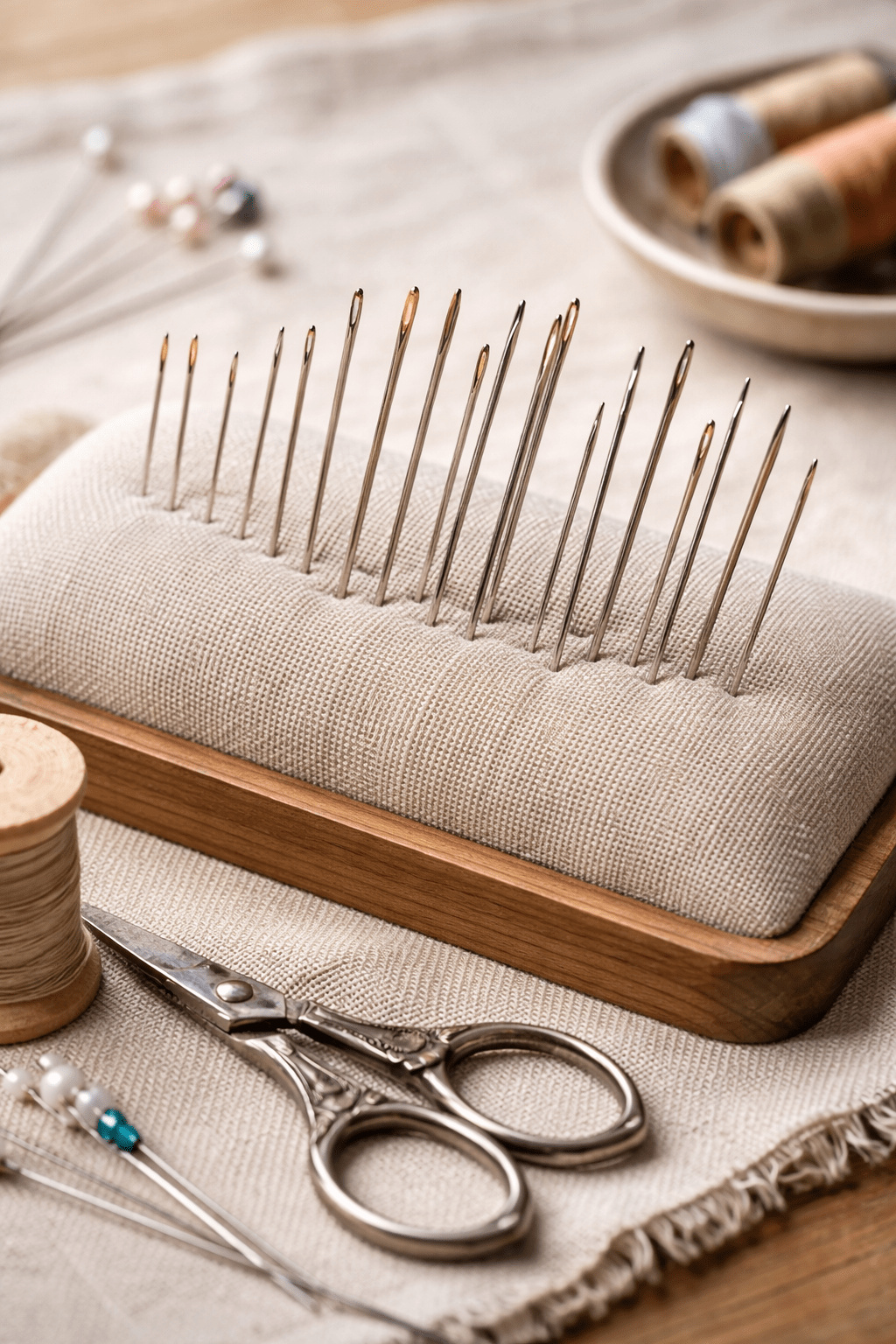
All about My Mostly Used Needles
My tutorials and patterns are written in a way that feels like chatting with a good friend;simple, clear, and sprinkled with humor. Why? Because I truly believe a little laughter is the secret ingredient missing from our daily lives. Stitching is meant to be fun, not intimidating, so I aim to break things down into easy, relatable steps that anyone can follow (with a chuckle or two along the way).
This playful style comes straight from my soul; it’s how I see the world. Life’s already too serious, so why not let embroidery be a lighthearted escape? Whether you’re learning or creating, my goal is to make it an enjoyable journey, with a few smiles stitched in for good measure.
Hand Embroidery Needles: How to Choose Them & Use Them.
Let’s unravel the “mystery” of embroidery needles! These tiny tools may be small, but they’re mighty; and the right one can save your sanity. Here’s a quick and entertaining guide to picking and using the right needle for your embroidery adventures:
Types of Needles You’ll Need
1.Crewel Needles (a.k.a. The All-Rounders)
-Looks Like: A sharp tip and a medium-long eye.
-Best For: Everything from surface embroidery to goldwork.
Sizes: 1 (huge) to 12 (tiny).
–Pro Tip: If you’re not sure, grab a variety pack. It’s the Swiss Army Knife of needle collections.
2.Tapestry Needles (The Gentle Giants)
-Looks Like: Long eye, blunt tip (won’t stab you… much).
-Best For: Counted work like cross-stitch and needlepoint.
-Sizes: 13 (big) to 28 (microscopic).
–Pro Tip: Blunt tips are your BFF for avoiding snags.
3.Chenille Needles (Chunky & Sharp)
-Looks Like: Long eye, sharp tip, thick shaft.
-Best For: Wool threads, specialty fibers, or anything bold.
-Sizes: 13-28 (with big sizes being massive).
–Pro Tip: Great for stitching big, dramatic statements.
4.Milliner Needles (The Knot Kings)
-Looks Like: Long, skinny, same thickness all over.
-Best For: Fancy knots (bullion, drizzle, French—oh my!).
-Sizes: 1-10 (standard) or 15-18 (because why not confuse everyone?).
–Pro Tip: Their long shaft makes wrapping thread a breeze.
5.Specialty Needles (For the Extra Fancy Stitchers)
-Curved Needles: Handy for tight spaces and awkward angles.
-Beading Needles: Super skinny for threading tiny beads.
–Pro Tip: Unless you’re working with teeny beads, a fine crewel needle often works just as well.
How to Pick the Perfect Needle
1.Thread Size vs. Needle Size
-The needle should easily pull your thread through the fabric without screaming for mercy.
2.Fabric Resistance
-If you’re sweating and the fabric’s puckering, you need a bigger needle.
3.Noise Check
-A gentle “pop” is good. A loud “zipper noise” means the needle is too small, and your thread is suffering.
4.The Goldilocks Rule
-The needle hole should be just right: big enough for the thread but not so big it leaves craters.
Final Words of Wisdom
-Keep a variety on hand. You never know when inspiration,or frustration will strike.
-Experiment and find what feels comfortable. Needles are like shoes: personal and sometimes hard to get right.
-Remember, you’re the boss of your embroidery. The needle is just here to help you shine!
Happy stitching!
 The Folk Stitch Studio